This is a post based on books and ideas I encountered in 2025 that I want to take into 2026.
This is mostly about hope and community but starts with regret and resentment.
What if…you felt both regret and hope?
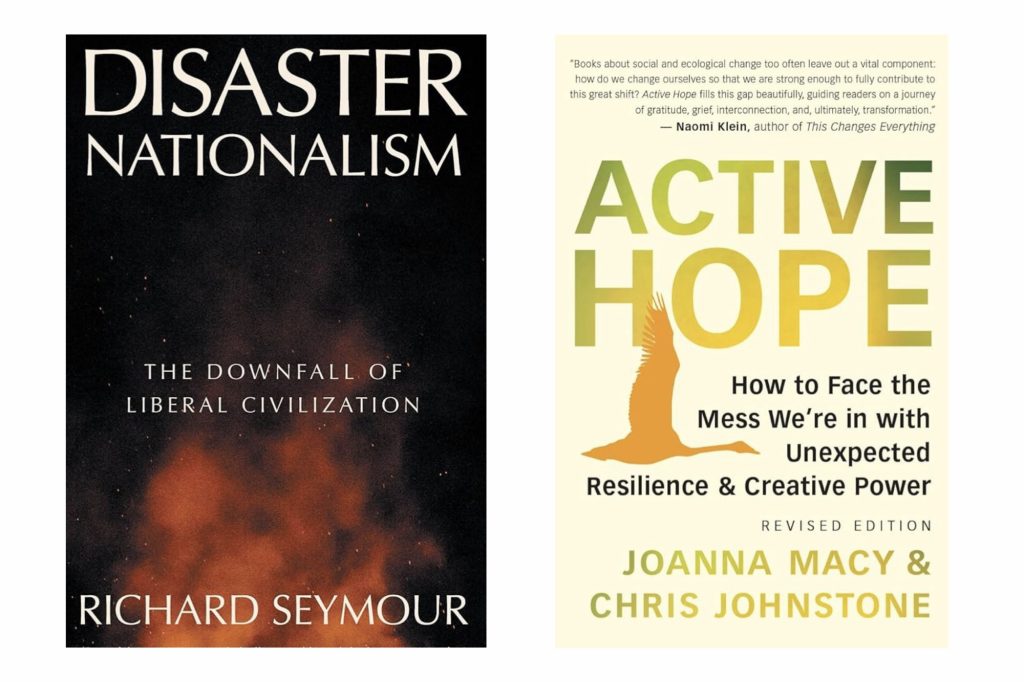
I started 2025 reading Richard Seymour’s Disaster Nationalism. It is a good book on how we got to here. It was most useful to me for clarifying the strong narrative pathway that the Right use to recruit and radicalise people. A narrative drawing power from lost pasts and promises made by liberals. The resentments and regrets that people may validly feel today but clarified and simplified by naming and blaming an Other who can then attacked.
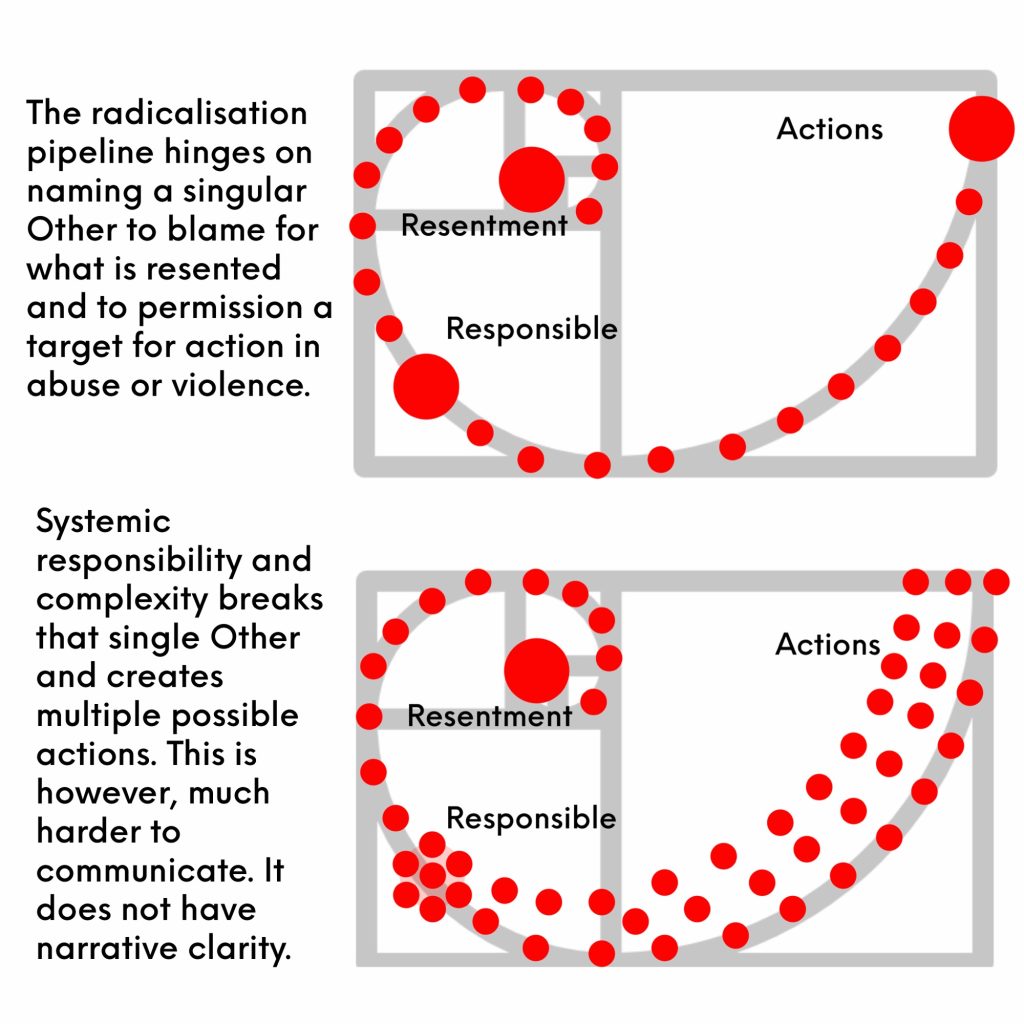
For most of 2025, I kept looking at this narrative and trying to imagine useful interventions. I have worked on a few projects around story telling, civic assemblies, systemic thinking and imagining hopeful futures. How clear the radicalisation narrative is compared to those complex explanations is very apparent.
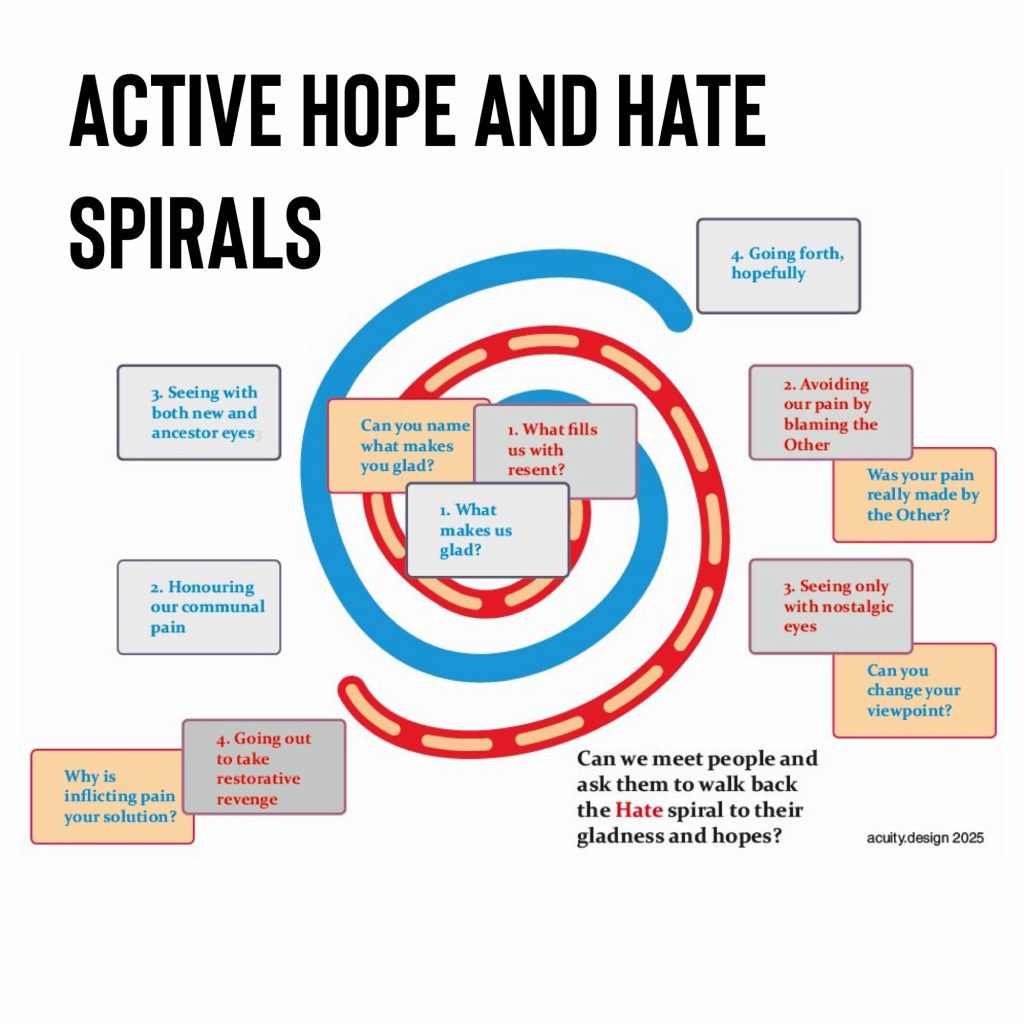
Near the end of the year, there was a post to the local Stroud Climate Collapse group about a one-day online workshop on Active Hope. I attended it and found it helpful (possibly not in the way that the facilitator intended). What the ideas in the Joanna Macy book showed me was there was another narrative that was positive and still rooted itself in memory and pain.
The diagram below interconnects the two narratives and adds in some interventions questions. It is founded in emotion and pasts but moves thru making the bad and the painful explicit. For people using Active Hope, this is a practice of honesty before imagining hopes. For people walking towards radicalisation, it is an intervention of being present with peoples’ sense of regret and making the histories apparent. In both, the past needs to be seen in the present for hope in the future.
Over 2025, I have also been attending Constellation Therapy sessions which are a form of facilitated communal experience to help individuals understand better how their current problems may well be rooted in past traumas of their ancestors and their societies. It is an interesting form of therapy which uses the power of being together to explore problems.
I have written a few posts this year on the need to go backwards to go forwards and the first What If? is based on these ideas.
What if you talk and share together the unfufilled promises and regrets before starting on imagining new futures and innovations. These foundations are being exploited by the Right to create their futures of violence towards the Others they name. We can take that fuel away from them and take people away from that narrative path.
What if…you longed for the future?
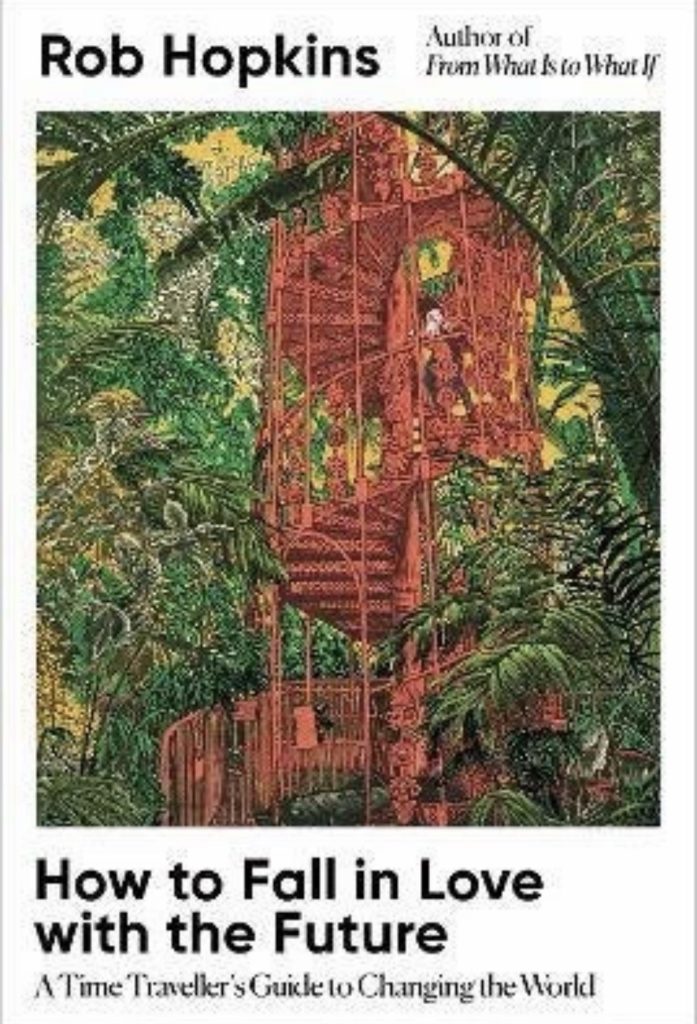
In the middle of the year, I read a new book by, and also attended a talk by, Rob Hopkins about time travel. What he was discussing was a technique of using a narrative form of not merely imagining hopeful futures but speaking and acting as if you had been in them. This technique was based on breaking thru the rather stilted futurology of liberal futures (all systems and data) and feeling the actual sense of gladness to be living in a better future.
More than the temporal technique, what I found helpful was the central ideal of Longing in all this. A longing to be in the future. A desire to have a role, a place and a community in that future. Many narratives about the future are caught up in Doomism: a future that is bad and in which you have no role apart from witnessing suffering. Again, this is something done better by the Right: they do not offer practical solutions but they do offer roles, uniforms and a gang of people who share your sense of pain and the authoritarian permission to inflict restorative revenge.
Near the end of the year, I heard Rhiannon Hughes talk about her research on anarchism and community support in disasters like Hurricane Sandy and Covid19. One thing she mentioned is the importance of a rupture in the typical process to enable imaging a different way of working together. This was the idea of needing an Outside. We all live within the places and communities that we have seen and expect to see. Sometimes we need to be unfooted or given a shoogle to see round the edges of the typical and imagine the different. Disaster is one way of breaking that wall. Narratives of travelling into better times is another.
What if you imagined and shared stories of future times that you want to be part of? What if people wanted to start today on making futures that they, or people they know, can have a place, a role and a sense of longing to be in?
What if…you asked?
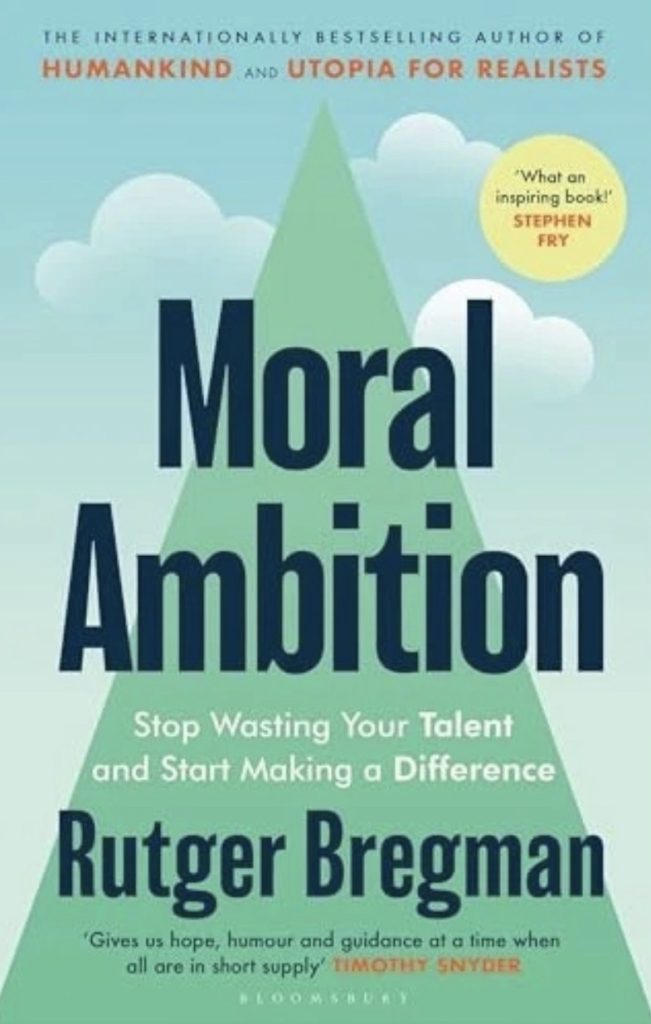
Finally, Rutger Bregman’s latest book (and series of Reith Lectures) on Moral Ambition. Again, it has very large goal but it was the smaller parts I found interesting.
There is section where the history of the Holocaust in the Netherlands is described and how the actions of one man helped save many people. What was powerful was how he enabled community action by asking for help. Later in the year I came across Active Bystander theory and this linked up. What people sometimes need is to be asked: to use their personal capacities or to work with others to build community capabilities.
This sense of asking when facing enormous or fearful problems is powerful. Arnold Douwes, in the Netherlands, bicycled from house to house asking people to take in and hide Jewish refugees. People said yes because they were asked. In many places, many people were never asked and thus never acted.

What if you asked for help as well as asking to help? What problems could be helped with if you set aside time to talk to a person who has capacities you do not or could work with you to create capabilities that do not exist.
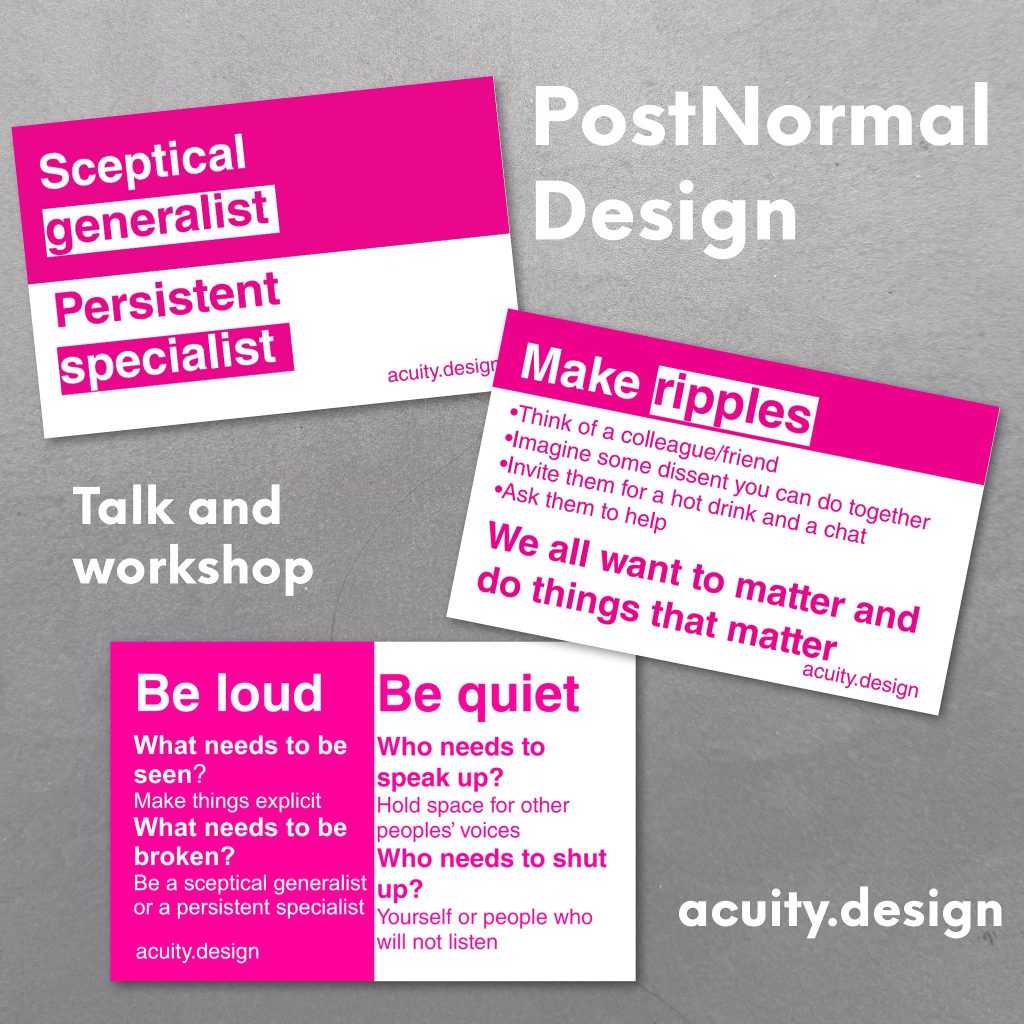
I did a talk in the middle of the year at CampDigital on Post Normal Design and realised afterwards that the Bregman book was relevant. That the ideas of breaking consensus and fracturing common beliefs were also about asking. Asking for help to do things that matter and, in gaining that help, to find a sense of shared agency in feeling that you all matter.
Have a good 2026, I hope to be doing some projects that use these ideas.
If they interest you, do let me know. I am asking for help: for better futures for all and for less violence towards the weak and excluded.